

Dhamma wisdom : ค้นหาหนังสือธรรมะ หน้า 7 / 14
หน้าหนังสือทั้งหมด
56
Ceremony of the Buddha's Relics
Near the Buddha's image, the venerable monks will recite. They will chant the sacred verses of the Buddha's teachings. When the Buddha's relics are displayed, the monks will perform the customary rite
The ceremony of the Buddha's relics involves venerable monks reciting sacred verses and performing customary rites. During this event, which is part of a sacred assembly, the relics are displayed to d
17
พระโคดม ผู้มีปัญญาและความรู้
พระโคดม ผู้มีปัญญาประดุจแผ่นดิน พระโคดม ผู้มีความรู้ประดุจ
แผ่นดิน แม้เพียงเวลาชั่วครู่ล่ะ
nahāma tamhā vippavasāmi muhuttam api brāhmaṇa
Gotamā bhūripaññāṇa Gotamā bhūrimedhasa. (Sn 1140)
yo me dha
บทความนี้พูดถึงความรู้และปัญญาของพระโคดมที่มีความสำคัญในวรรณกรรมพุทธศาสนา โดยเฉพาะในบทที่มีการประกาศธรรมที่เห็นได้ด้วยตนเอง ซึ่งพระโคดมได้แสดงให้เห็นถึงความยิ่งใหญ่ในความรู้ที่ไม่มีค่าที่เปรียบเทียบได
21
The Inaugural Teaching of the Buddha
He agreed to teach the Dhamma, but remained undecided as to exactly who he should teach first. Eventually, the Bud- dha decided to make the journey to teach the ‘Group of Five’ [pañcavaggiya] who were
The Buddha decided to teach the Dhamma starting with the Group of Five at Isipatana Deer Park. His first sermon, the Dhammacakka pavattana Sutta, serves as a crucial teaching, symbolized by a royal ch
111
Understanding the Dhammakāya in Insight Meditation
called the ‘Coarse Dhammakāya Arahant’ or the ‘Subtle Dhammakāya Arahant’ — the latter two being the bodies of enlightenment of the arahant. The Dhammakāyas are all transcendental [lokuttara] in natur
This text delves into the concept of Dhammakāya Arahant, distinguishing between the Coarse and Subtle Dhammakāya. It explains that these bodies are transcendental and consist of pure aggregates that a
187
Transportation of Communities in Buddhist Scriptures
to transport the community from one continent to another or even one world to another. In the time of the Buddha, the scriptures report that people and the Universal Monarch were transported from anot
This text discusses the transportation of the community during the time of Buddha, where beings from Uttarakururūpa were brought to Jambudīpa via the Jewelled Wheel of the Universal Monarch. After the
216
The Proclamation of the Supreme Dhamma
anuttaram dhammacakkam payattitam Dhamma which cannot be denied by any priest or
appattvattiyam samanaena ya brahman-
ena ya devena va maena va brahmuna
va kenaci va lokasminti".
Bhummanam devanam sa
In this text, we witness the proclamation of the Dhamma that cannot be denied by any priest or god. The text details the reactions of different heavenly deities from the Catummaharajika to the Brahma
222
Understanding Dhammakāya and Defilements in Meditation
deep meditation 114
defilement 122: different, for each
inner body 135; of Angelic Body 135;
of Dhammakāya Anāgāmi 137; of
Dhammakāya Gotrabhu 136; of
Dhammakāya Sakidāgāmi 136,
137; of Dhammakāya Sot
The text provides an in-depth examination of the Dhammakāya concept, explaining various levels such as Dhammakāya Anāgāmi, Gotrabhu, and Sakidāgāmi. It discusses the nature of defilements and how arah
42
Untitled
sight of a few biting ants? In self-disgust, he set aside the bottle and continued to meditate unprotected.
The bright clear sphere of Dhamma which he had first perceived before his midday meal was
This is a summary of the text captured from the OCR process. It includes key points and overarching themes discussed within the text, designed for understanding by the reader. For more details, please
37
Practicing the Four Universal Forms of Benevolence
The Buddha answered this question in one word: benevolence. That is to say mutual benevolence, the practice the Four Universal Forms of Benevolence (Sāngahavatthu), promote happiness in living togethe
The Buddha highlighted benevolence as key to mutual happiness. The Four Universal Forms include: 1. Giving (Dāna) – sharing wealth and support fosters a positive atmosphere. 2. Pleasant Speech (Piyavā
52
Understanding the Noble Eightfold Path and Threefold Path in Buddhism
[Right concentration, again, becomes the basis of right views, right aspirations, and other steps of the noble eightfold path, which is now experienced on a higher level, and this spiral-like progress
This text elaborates on the interrelationship between Right Concentration, Right Views, and Right Aspirations as pivotal elements of the Noble Eightfold Path leading to liberation. It discusses the sp
5
Understanding Dhamma Through the Teachings of Luang Por Dattajevedo
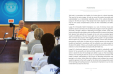
This book is a translation into English of a lecture given by a Most Venerable Thai monk in his native tongue. In order to convey the content accurately and understandably to an international readersh
This book presents an English translation of a lecture by Luang Por Dattajevedo, a respected Thai monk, emphasizing the importance of ethical learning and teaching in understanding Dhamma. His charism
14
Wisdom Across Religions: An Interview with Luang Por
Interview
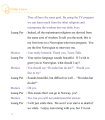
They all have the same goal. By using the TV program
we can learn much from the other religions and
incorporate the wisdom into our daily lives.
Luang Por Indeed, all the mainstream religion
In this enlightening interview, Luang Por discusses the commonalities among major religions and the importance of incorporating their wisdom into daily life. It marks Luang Por's first appearance on N
48
Raising Children: Cultivating Supreme Characteristics
Part Two: Raising Children
wisdom and moral training from their parents (Group
#4). Even though they may not be wealthy, these children
have the ability to develop into successful, wealthy and
moral a
In developing children into successful and moral adults, it is essential for parents to consider the qualities they want their children to possess. The text highlights three supreme characteristics: p
13
Pearls of Inner Wisdom: Our Only Real Belongings
12
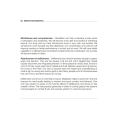
Pearls of Inner Wisdom
2.Our Only Real Belongings
There are only two things
that really belong to us.
One is our mind
and the other is the point inside us
which is home to the mind.
Mind consists o
This text delves into the concept that our only true belongings are our mind and its inner home, referred to as the 'seventh base'. It explains the functions of the mind and emphasizes the importance
92
88 Meditation Benefits
88 MEDITATION BENEFITS
Mindfulness and comprehension – Meditation can help us develop a keen sense of perception and awareness. We will become more alert and mindful of everything around. Our body an
Meditation enhances mindfulness and comprehension, fostering perception and awareness. It aligns body and mind, leading to improved focus and memory, which results in better performance in academics a
45
The Teachings of the Buddha: Understanding Enlightenment
Suzanne Jeffrey
why we are here and where do we go after death. So, we have some questions regarding His life: for example, why did he spend six years in self-mortification? Is the number six signifi
In this teaching, Luang Por discusses the significance of the Buddha's life and his journey towards enlightenment. Born into wealth and possessing unique qualities, the Buddha sought wisdom from an ea
10
The Search for Knowledge and Freedom from Suffering
the day we lie on our deathbed, facing the reality of our mortal impermanence,
with all our fears returning to confront us once more.
Knowledge or wisdom that reveals the truth has and will always pr
When we confront our mortality, knowledge reveals truth and offers a path to peace. Ignorance leads to fear, prompting the pursuit of wisdom to alleviate suffering. We seek answers to life's fundament
23
Understanding the Path to Nirvana: The Buddha's Teachings
the attainment of Nirvana. In the Dhammacakkapavattana Sutta, further to the clarification of the profitable path of practice, the Buddha stipulates paths of practice that are unprofitable and might e
This text discusses the Buddha's elucidation of the paths to Nirvana as presented in the Dhammacakkapavattana Sutta. It highlights the unprofitable practices, particularly the path of sensual indulgen
142
The Path to Enlightenment: Understanding Dhammakāya
the knowledge arising from cognition may be erroneous.
The knowledge arising from 'knowing', by contrast, de-
pends on the Dhammakāya — it is knowledge based on
true wisdom such as the Four Noble Trut
This text discusses the distinction between knowledge gained through cognition and that which arises from true wisdom based on the Dhammakāya. It details the bodhisatva's rigorous meditation practice

107
ความสำคัญของชีวิตมนุษย์
uman life is
very important. Although
humans' live for only a
short span of seventy
years, he can do so much!
Man can decide whether
to produce good deeds
or bad deeds, unlike other
beings who cannot
uman life is very important. Although humans' live for only a short span of seventy years, he can do so much! Man can decide whether to produce good deeds or bad deeds, unlike other beings who cannot